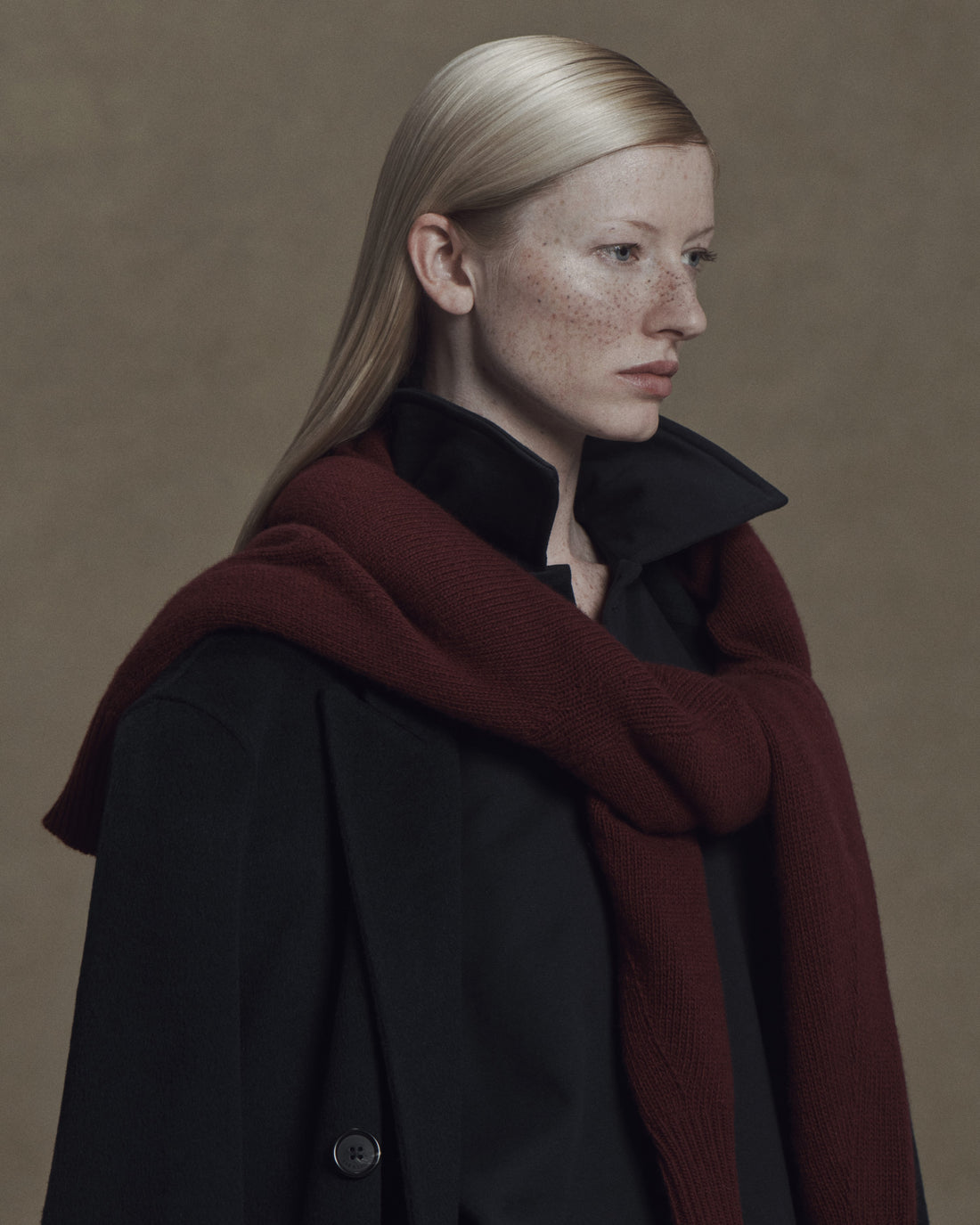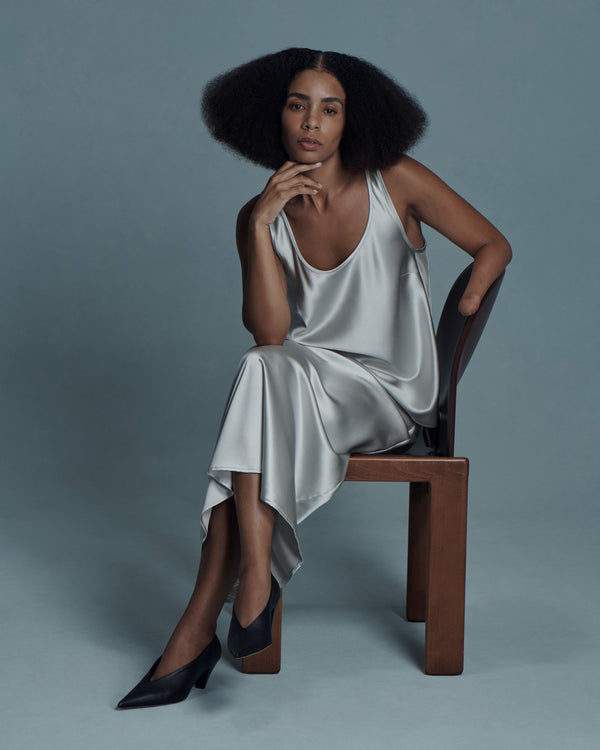


It slipped out mid-sentence, in an answer about how she shops: she sees a piece she likes, starts pairing it against her wardrobe, and then there's a beat. "I've got to cover her and make sure she's okay."
Lulu calls her leg her. Not it. Her. Lulu lives with severe scarring on her legs, and she talks about that leg the way you'd talk about someone you're responsible for and fond of. Someone you'd check on before you left the house.
She was styling long before she was thinking about coverage.
Her mother was a stylist in New York, and Lulu says she inherited the brain more than the wardrobe, though she has some of that too. The day we spoke, she was wearing her mother's Club Monaco jeans from the eighties that any model off duty would have paid hundreds of dollars for. She's a vintage person, and unsentimental about why: the old clothes last the longest, and they're the best. They still wash well. You have to care for them.
Asked to describe her personal style, she lands on simple, vintage, and, after some thought, layered. Different tanks, still neutral, still classic. "I'm such a neutral person."
What she looks for hasn't actually changed that much.
When asked whether she shops differently now than she did before the accident, you would expect the answer to be yes. Mostly, it's no.
"I still honestly wear whatever I want."
What comes first is still the eye: she sees something, likes it, and starts pairing it against what's already at home. The styling brain runs ahead of everything else. Fabric mattered to her before, and it matters to her now; that part came from her mother and hasn't moved. What's new is a second pass. She'll find the piece, and then there's a beat where she thinks about her leg.
"I've got to cover her and make sure she's okay."
Her. Not it.
Lulu talks about her leg the way you'd talk about someone you're responsible for and fond of, someone you'd check on before leaving the house. It slipped out mid-sentence, inside an answer about styling, and it's the truest thing in the interview.
On the wrap, and the hunt for better tape.
Right now the wrap is athletic tape from Target. Two dollars, and it works. She keeps it close to skin tone, neutral, unfussy, the same instinct that governs the rest of her wardrobe. But there was a better tape once. A pearlescent medical tape her mother had in the first aid kit at home, years ago, which Lulu has not been able to find since. She says it photographs beautifully. She was also, briefly, close to buying Sanrio athletic tape online (okay, chic). When we asked whether she ever has fun with the wrap, she said "I wish" — and then, after a pause: "I do like sparkles."
Dance is how she got back.
She trained competitively as a teenager after one class hooked her at twelve. Her mother had put her in ballet as a baby. She stopped, as people do, then came back after the accident, and it turned out to be the thing that worked.
"It's honestly the biggest form of recovery for me. It's made me rediscover this true love that I have for my body, music, movement."
She calls it a two-in-one: it's training, and it's her happy place. She has a mirror at home. It's free, and you can do it anywhere.
There's a fear that comes with a changed body: of being in it, of paying attention to it. Dance doesn't permit that avoidance. You have to be in your body to do it at all. That's the part she got back.
We asked what she'd want a designer to make for her, if she could ask for one thing.
A dress. Summer, humid, the season when she'd otherwise be in a t-shirt dress with a wrap on her leg. Something very chic, beautiful fabric, cut so she can show her leg or not — a slit she controls.
Not a solution. A dress.